ABOUT US

Sunday, December 31, 2006

MilVets Library: TABLE OF CONTENTS

Saturday, December 23, 2006

Josh Arthur and Mark Xue


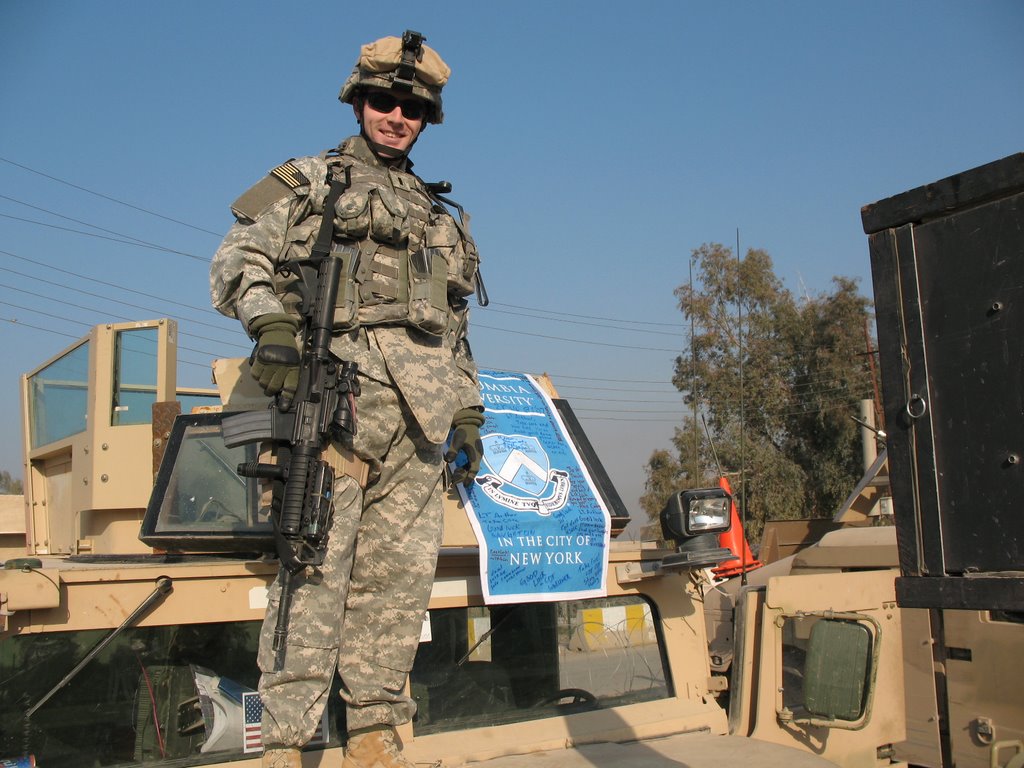
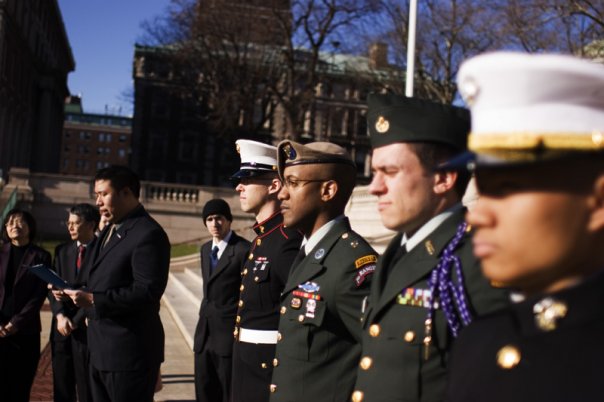
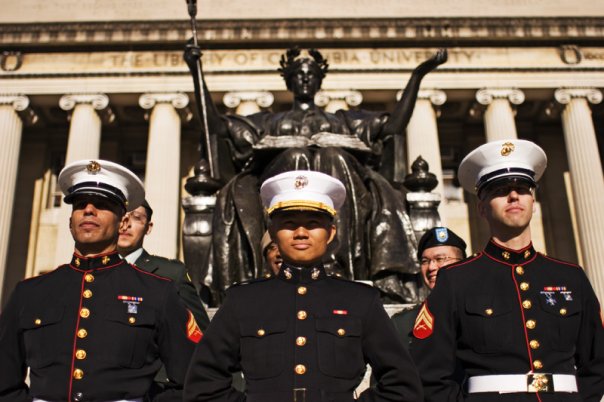
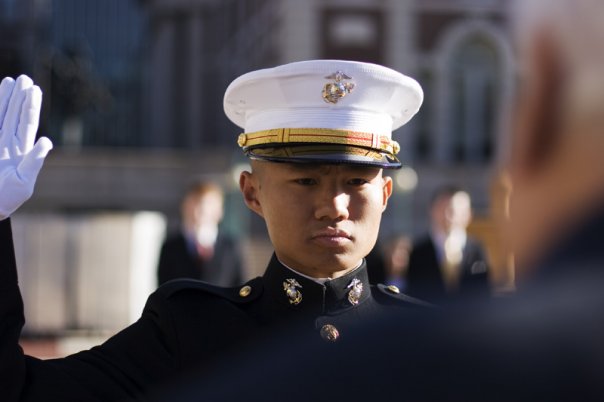
Mark Xue, CC 06, had his commissioning ceremony on Low Plaza, Columbia University, on December 16, 2006. Josh Arthur sent the picture of himself and his signed Columbia banner from Baghdad, Iraq, on December 19, 2006.

Tuesday, December 19, 2006

MilVets Library: U.S. Army Lieutenant Josh Arthur, Columbia Class of 2004

Original at http://columbiamilvets2005-2006library.blogspot.com/2006/12/us-army-lieutenant-josh-arthur-columbia.html

Josh Arthur CC04 Columbia banner Baghdad 1 Josh Arthur CC04 Columbia banner Baghdad 2 Josh Arthur CC04 Columbia banner Baghdad 3


19DEC06, Baghdad, Iraq. Pictured is Army Lieutenant Josh Arthur, who is a Columbia College Class of 2004 graduate. Josh's Columbia 'good luck' banner is signed by Columbia students (milvets, ROTC cadets and Marine officer candidates), professors, alumni, and university officials. He currently is serving as an infantry platoon leader in Iraq, where these photos were taken.


Read Josh's e-mails from Kuwait and Iraq:

07NOV06, 13NOV06, 25NOV06, 27NOV06, 19DEC06, 02MAR07, 26AUG07, 27NOV07, 09JAN08.


Update: January 18, 2007 Columbia Spectator print magazine The Eye:

Columbia's Warrior - CC'04 Grad Goes to Iraq (scroll down to page 5).


Update: January 15, 2007 Columbia Spectator on-line magazine The Eye:

Special Web-Only: Interview with Lt. Josh Arthur, CC ‘04. Copy at web.archive.org.


Update: Josh is featured in the January/February 2007 Columbia College Today and Spring 2007 Columbia Magazine (scroll down in both).


Update: In early January 2008, Josh returned home from his deployment in Operation Iraqi Freedom.

Labels:

Saturday, December 16, 2006

MilVets Library: U.S. Marines Lieutenant Mark Xue, Columbia Class of 2006

Original at http://columbiamilvets2005-2006library.blogspot.com/2006/12/us-marines-lieutenant-mark-xue-columbia.html

Mark Xue CC06 first salute with Dan Cross GS07
Mark Xue CC06 mother pinning on rankMark Xue CC06 commissioning ceremony opening remarks

Mark Xue CC06 with Columbia milvets and Alma MaterMark Xue CC06 commissioning oath with Professor Silver

Photos by Matt Mireles (http://www.mattmireles.com/).


OPENING REMARKS. Eric Chen, General Studies, 2005-06 MilVets Vice President:


Ladies and Gentlemen, good afternoon and welcome to the commissioning ceremony for Columbia College Class of 2006 graduate and Marine Corps Lieutenant Mark Xue. My name is Eric Chen and I will be the Master of Ceremonies for today's event. I would like to give a special word of thanks to our sponsors: Luke Stalcup and the US Military Veterans of Columbia University, Cadet Riaz Zaidi and the Hamilton Society of Columbia University, and Captain Ted Graske, Class of 1959, and the alumni of the Columbia Alliance for ROTC.


Before we begin, I want to tell you how honored we are to present Mark to you today as Lieutenant Xue. Leading Marines as an officer, bearing direct responsibility for their lives and well-being, and by extension, the lives and well-being of their families - it is the highest of responsibilities. It is a sacred responsibility. And it is a responsibility I value deeply as a former enlisted Soldier. As a classmate, I can tell you Mark is worthy of the path he has chosen, and I have no doubt he will lead his Marines well and bring honor upon himself, his family, this university and our beloved nation.


LOW PLAZA, COLUMBIA UNIVERSITY - On Saturday, December 16th, 2006, Columbia College 2006 graduate and Hamilton Society president emeritus Mark Xue, CC 06, was commissioned as a Second Lieutenant in the United States Marine Corps in a ceremony held on Low Plaza. The event was organized by US Military Veterans of Columbia University (MilVets) President Luke Stalcup and Hamilton Society President Riaz Zaidi. MilVets vice president emeritus Eric Chen served as the master of ceremonies. Other Columbia students and alumni who participated in the ceremony included MilVets president emeritus Oscar Escano, Army MAJ Taylor Hwong, Marine Cpl Dan Cross, who rendered Lt Xue’s first salute, Marine Cpl Matt Sanchez, Hamilton Society Vice-President Stefan Hasselblad, and Army ROTC cadet Elizabeth Feldmeier. Columbia sociology professor Allan Silver administered Lt Xue's oath of office, and his parents pinned on his Second Lieutenant rank. The ceremony concluded with Lt Xue leading all attending in the Marines hymn. Spectators included University Chaplain Jewelnel Davis and Vice-Provost Roxie Smith. The commissioning ceremony was sponsored by the US Military Veterans of Columbia University, the Hamilton Society, and the Columbia Alliance for ROTC (CAR). The reception at Cafe Pertutti was hosted by CAR Chairman Ted Graske, CC 59.


Also see the event account for Columbia College Class of 2006 graduate, Air Force Lieutenant Robert Wray's commissioning ceremony held in the rotunda of Low library on May 19th, 2006.

Labels:

Thursday, July 06, 2006

MilVets Library: 2005-06 MilVets Executive Summary

Original at http://columbiamilvets2005-2006library.blogspot.com/2006/07/2005-06-milvets-executive-summary.html


“The primary, overall mission of MilVets as we enter the 2005-2006 academic year is to generate influence by increasing our exposure.”
“The long-term goal for MilVets is to go national within four years.”

Stated April 2005 by President Oscar Escano

“If a student thinks Jewish issues, he thinks Hillel; if he thinks military issues, he ought to think MilVets.”
Stated April 2005 by Vice President Eric Chen

2005-06 Executive Goals:
Increase the public stock (value). Raise the public profile. Develop philosophy, culture and community. Identify and prepare future leaders. Recruit and expand membership. Professionalize administrative structure and practices. Develop the website. Create a logo. Acquire a group banner. Acquire Category I funding from ABC. Network with veterans organizations. Network with Columbia military alumni. Network with student-veteran groups.

Spring-Summer 2005 Achievements:
Constitution revision.
E-Board election. President Oscar Escano and VP Eric Chen elected.
Summer preparation. "About Us" statement, philosophy, goals and plans developed.

Fall 2005 Achievements:
Website renovation. Gallery, sign-up, Columbia military history, updates and other functions added.
Tables at General Studies Orientation and Columbia Activities Day.
MilVets PT.
Reception for United States Forces Korea Commander GEN Leon LaPorte.
Through the Eyes of a Soldier III: Basic Training.

Spring 2006 Achievements:
Executive Council formed.
Logo created.
Banner acquired.
Response to Activities Day hate incident. Press release, delegation meeting with Provost Alan Brinkley, “military status” added as protected category to the university discrimination policy.
Through the Eyes of a Soldier IV: Iraq and Afghanistan veterans.
University Chaplain (Jewelnel Davis) prayer for service-members and veterans with military-style flag-folding ceremony in Saint Paul’s Chapel.
Post-graduate debriefing with MilVets alumni.
Hosted Michael Gordon, author of Cobra II, in SIPA.
Operation Iraqi Children school supply kits drive. Co-sponsored by the College Democrats, College Republicans, Students United for America, Foundation for the Defense of Democracies Fellows and Hamilton Society (ROTC cadets group).
Constitution revision.
E-Board election. President Luke Stalcup and VP Peter Kim elected.
ROTC commissioning ceremony in Low Library.
Category I funding from Activities Board of Columbia approved.

Other Achievements:
Media coverage. Columbia Record, Columbia Spectator, Columbia Current, Fox and Friends, Fox News, New York Sun, Dateline NBC.
Weekly newsletter. MilVets News.
Movie nights. Gunner Palace, Team America: World Police, The Best Years of Our Lives, Aliens.
Social gatherings at Nacho Mama's and other locations.
Signed Columbia ‘good luck’ banners given to deployed milvets Seth Hillbrand and Paul Barnes.
Provided primary sources for military-related research projects in Journalism, School of the Arts and Anthropology.

Summary:
MilVets achieved all the 2005-06 executive goals except formal networking with Columbia military alumni and other student-veteran groups. From the start of Fall 2005 until the end of Spring 2006, the official membership of MilVets grew from 28 to 86 members, not including alumni and non-affiliated supporters. The most important decisions of 2005-06 – each initiated by Oscar Escano - were to establish “go national” as the long-term goal, authorize the Executive Council, and respond to the Activities Day hate incident by requesting amendment of the university discrimination policy.

2005-06 MilVets Executive Board:
President Oscar Escano
Vice President Eric Chen
Activities Director Matt Sanchez (resigned)
Treasurer Scott Stewart (resigned)
Secretary Jim Davis (resigned)
Secretary Julian Petrin (replacement)
Webmaster Zhuo Zheng

2005-06 Executive Council:
Mike Nicholas
Luke Stalcup
Todd Murphy
Mike Podberesky

On-line References:
Main website: http://www.columbia.edu/cu/usmilvetscu/
Reference library: http://www.milvetslibrary.blogspot.com/

Gallery: http://community.webshots.com/user/milvets
Information dump: http://www.milvets.blogspot.com/


Written by Eric Chen, 2005-06 Vice President, U.S. Military Veterans of Columbia University, 05JUL06.
Approved by Oscar Escano, 2005-06 President, U.S. Military Veterans of Columbia University, 06JUL06.

Point of Contact: Eric Chen (elc2003 at columbia.edu).

Labels:

Saturday, June 17, 2006

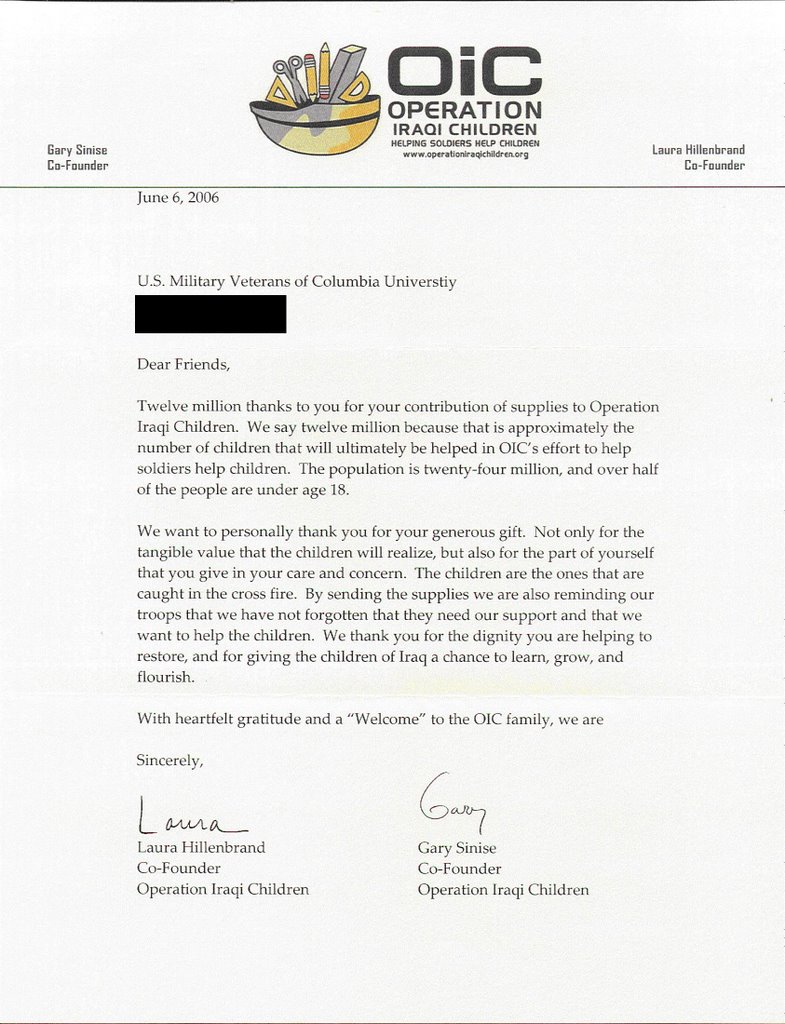
MilVets Library: Thank-you letters from Operation Iraqi Children and People To People International, June 2006

Original at http://columbiamilvets2005-2006library.blogspot.com/2006/06/thank-you-letters-from-operation-iraqi.html


The description of MilVets' Spring 2006 school supply kits drive from the Operation Iraqi Children website (scroll down or search for "OIC Collection at Columbia University"):

Eric Chen, Vice-President of the U.S. Military Veterans of Columbia University, wanted to bring Operation Iraqi Children to campus. He began planning an OIC collection at the end of 2005. MilVets, Columbia's student-veteran organization, with the Hamilton Society, Columbia University College Republicans, Columbia University College Democrats, Students United for America and the Foundation for the Defense of Democracy Fellows, agreed to sponsor the project which was carried out during the Spring semester. Posters and collection boxes were put up around campus and the donated supplies were boxed and sent to the OIC Warehouse on May 13, 2006.


Pictured are Columbia students who helped with the project including MilVets President Oscar Escano, a former Army Ranger who served in Operation Enduring Freedom, 2006-2007 MilVets President Luke Stalcup, a former Army Explosive Ordnance Disposal team leader who served in Operation Iraqi Freedom and MilVets councilmember Todd Murphy, a former Marine who served in Operation Iraqi Freedom.


The thank-you letters to MilVets from Operation Iraqi Children and People To People International (click to enlarge):


* A note from the project organizer.

Labels:

Wednesday, June 14, 2006

VP note on Operation Iraqi Children Spring 2006

From OIC website - OIC in Action Providers: Click Here! to learn more about the efforts that have been undertaken by various groups around the world to provide School Supplies for the children of Iraq.

As the MilVets VP, I organized an OIC school supply kits collection drive that took place during the latter part of the Spring 2006 semester. By the end of the project, my top goal was for OIC at CU to look right, and it did. I had the sponsors I wanted, we had up around campus the large color flyers I wanted, I had the collection boxes in most of the places on campus I wanted, and the drive projected the message I wanted to the campus. We even collected a decent amount of donations, thanks especially to the General Studies community and Students United for America. I didn't get Spectator coverage for the project, but we did get a solid plug (above link) on the OIC website and an official thank-you letter.

On a personal level, I carried out a worthwhile project I wanted to do for its own sake.

For MilVets, we checked the block on a community service project and worked with a range of political campus groups - which was hitherto taboo - on a pro-military apolitical campus project.
Here are the thank-you letters from Operation Iraqi Children and People To People International to MilVets for the Spring 2006 school supply kits drive.


Eric Chen
MilVets VP

Tuesday, June 13, 2006

OIC at CU on Operation Iraqi Children website

From Operation Iraqi Children's "OIC in Action" web-page:

Click Here! to learn more about the efforts that have been undertaken by various groups around the world to provide School Supplies for the children of Iraq.

Saturday, June 03, 2006

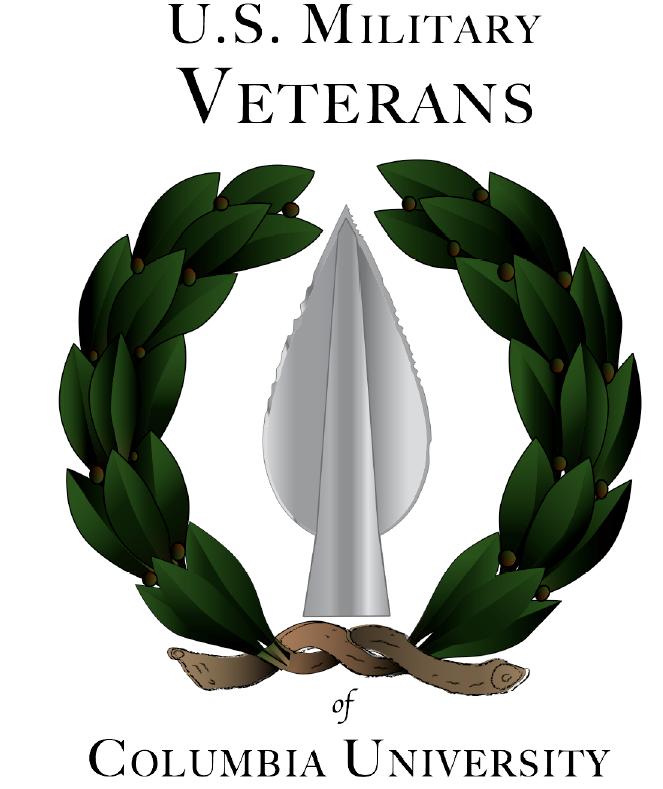
MilVets Library: MilVets Logo and Symbolism

Original at http://columbiamilvets2005-2006library.blogspot.com/2006/06/milvets-logo-and-symbolism.html

Original MilVets logo
MILVETS LOGO AND SYMBOLISM

Task:
Develop a visual logo that is unique to MilVets, and represents a diverse membership and the values set forward in the MilVets About Us statement. The logo must have a simple reproducible design and must not imply DoD affiliation.

Primary meaning:
The Olive Wreath symbolizes our greater purpose of Peace and the corporeal ring symbolizes our life transition to ‘Civilization’. The Spearhead symbolizes our military background. The scarring on the Spearhead symbolizes the war experience in the group.

Secondary meaning:
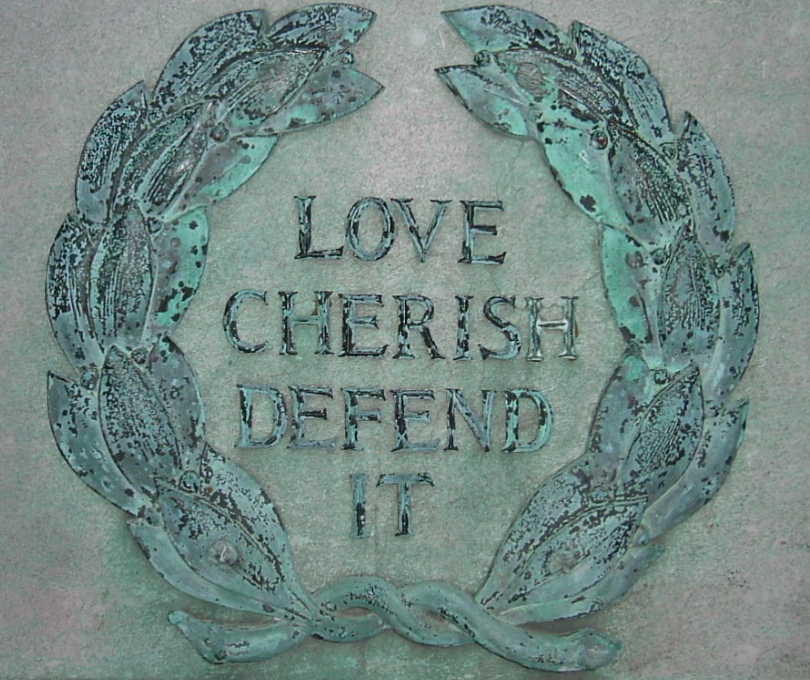
Olive Wreath - Columbia affiliation: It is the same olive wreath as in the inscription beneath the American flag on Low Plaza, donated by the Grand Army of the Republic (see here and here for background). An olive wreath is also below the Columbia flag on Low Plaza. Therefore, it symbolizes Columbia and Columbia military heritage, and to an extent, our American affiliation. An olive wreath can also symbolize nobility.

Love Cherish Defend It at base of American flag Low Plaza Columbia University
Spearhead – Warrior Ethos: Our military is commonly referred to as the "tip of the spear", which is appropriate. At the same time, the spearhead is not a branch nor even U.S. Military specific symbol - it is an ancient symbol of the Warrior Ethos. MilVets is less about defining ourselves by the uniforms we wore or still wear. Our group is more about the common experiences we each internalize in our own way and the values we choose to carry forward from our military histories.

The Spearhead points up for eternal vigilance. Its placement at the center of the Olive Wreath symbolizes the living spirit of the nation’s warrior-defenders in the heart of MilVets.

Aesthetic:
Clean, simple, good balance and symmetry, unmistakable up-down orientation, mostly closed and self-contained design. The primary meaning, if not the secondary meanings, should be obvious. The design should be easily reproducible as a logo on a banner, stationery, apparel, etc..

Concept and symbolism by Eric Chen. Final design by Mike Nicholas with final detailing by Luke Stalcup. Todd Murphy contributed artistic suggestions. Spring 2006 - Oscar Escano, President.

Labels:

Friday, May 19, 2006

MilVets Library: U.S. Army Lieutenant Sean Wilkes, Columbia Class of 2006, May 2006

Original at http://columbiamilvets2005-2006library.blogspot.com/2006/05/us-army-lieutenant-sean-wilkes-columbia.html


May 19th, 2006, Low Plaza, Columbia University. MilVets Vice President Eric Chen renders to newly commissioned U.S. Army Lieutenant Sean Wilkes, CC06, his Columbia-military first salute with Alma Mater witnessing.


Photo by MilVets President Oscar Escano.


Also see the event account for Columbia College Class of 2006 graduate, Air Force Lieutenant Robert Wray's commissioning ceremony held in the rotunda of Low library on May 19th, 2006.

Labels:

Wednesday, May 10, 2006

Shane Hachey (GS 04) letter to Columbia University Senate

Subject: Columbia v. The Military

Dear Senators and former Senators,

I would like to take this opportunity, on the 1 year anniversary of the
Senate vote against ROTC, to say a few words regarding that vote and
its subsequent effects.

To begin with, in addition to and perhaps more-so than my
disappointment with the outcome of the vote, was my disappointment with
the almost show-trial atmosphere of the Senate meeting. The back rows
of the room were lined with jeering members of Columbia's socialist
organizations, and the only Senator who had the audacity to actually
defend ROTC and the military in general was loudly booed and hissed
down while the rest of the Senate, including the Executive Committee,
sat and watched. In a decision that I now regret, I refrained from
speaking up and telling these hecklers to let the man speak, feeling
that because I was not a current student or a Senator, it was not my
place to try to bring order to this meeting. Apparently, no other
senator, nor even the President of the Senate himself, thought it their
place either. Of course, it was another matter entirely when Provost
Brinkley brought down the house with his anti-ROTC speech.

Almost as disappointing was the uninformed nature of the discussion
amongst the Senate. It appeared that most senators, at least the ones
who spoke, had not thought the issue through ahead of time, and we
wasted valuable time while people asked and answered questions that had
been gone over numerous times in the year leading up to the vote. And
of course, the impassioned statements made regarding President Bush,
the war in Iraq, and general U.S. "militarism" strayed the discussion
even further off track. In such an unprepared, unprofessional, and
politicized environment, it is little wonder that the vote was so
lopsided.

I want to be clear about this. It seems quite apparent to me that
reasonable people can disagree about whether ROTC has a place on
Columbia's campus, and I believe that the 5-5 split vote on the Senate
ROTC Task Force is a clear example of reasonable people disagreeing.
However, a lopsided 53-10 vote, taken in a meeting conducted in the
above manner, clearly evidences not reasonable people disagreeing, but
a group of people supposedly representing a diverse student body (who
are at least evenly split on the issue) casting an ideological vote
against our military, against our service members, and, I imagine in
some minds, against our current administration and its military
policies.

It is difficult for me to say in a restrained manner the way such a
vote affects the way I as a veteran and son of a veteran feel about
Columbia University. Despite my great educational experience at
Columbia, this vote and the way it took place cast an official stamp on
the sort of anti-military and anti-American sentiment common among the
most radical of Columbia students. As if I wasn't distanced enough from
this school, my experiences dealing with the opponents of ROTC and,
more to the point, the University Senate, have left me feeling almost
entirely alienated from Columbia. I'm sure there are people who cast a
carefully considered and well thought-out vote against ROTC, but I
believe that they were significantly outnumbered by people using their
vote to cast an ideological protest or to make some sort of
"statement." In concrete terms, what those votes have done is to push
myself and a number of other veteran (as well as some non-veteran)
alumni even farther away and create in some of us a certain animosity
towards our alma mater.

Let's make no mistake: This vote had no tangible effect on the Don't
Ask, Don't Tell policy. It did not "send a message" to anyone in
Washington except that our university is hostile to the military (quite
the point for some of you, I'm sure). It did not start any movements or
get any balls rolling towards changing this unfair and impractical
policy. All it did was express a vote of no confidence in our military
and those who serve in it, further isolating Columbia and its students
from the people who serve our country and those who support them.

As it stands in light of the Supreme Court's recent ruling on the
Solomon Amendment, this whole debate is a nullity if the federal
government decides to force the issue. For those who take issue with
the existence and use of the Solomon Amendment, consider this: besides
the implicit logic that an entity that provides money, especially in
amounts of hundreds of millions, has the right to attach conditions to
the receipt of that money, you might recall that the same threat of
losing federal funding is what provides the teeth for important
non-discrimination codes, including Title IX (gender discrimination)
and Title VI (racial discrimination). Therefore, I find it quite
disingenuous for President Bollinger and others to lament the
government's use of the "power of the purse" to pressure universities
to adopt particular policies. I doubt that anyone at Columbia would
seriously question the ability of the federal government to use the
"power of the purse" to enforce the above sections of the Civil Rights
Act, or the morality of such force. Since the means of the purse are
generally agreed upon as legitimate, the real objection President
Bollinger and others who take his view must have is the ends of the
Solomon Amendement, i.e. allowing military recruiters and cadets equal
access to university facilities.

Also disingenuous is the President's assertion immediately after the
vote that the vote itself reflected a "consensus of the Columbia
University community" considering that the single poll we have
suggested a 65% majority of students in favor of allowing ROTC to
return to Columbia. Day to day experience also bears out this sort of
proportionate sentiment. The sort of statement made by President
Bollinger is at best unverified and at worst patently false. Again,
this just points to the inadequacy of the entire process that led to
last year's vote. It makes me wonder who exactly the Senate represents.
Some might respond that the senate was protecting a minority from a
majority. As I have stated before, this vote did nothing to quicken the
death of Don't Ask Don't Tell, nothing to protect gay students at
Columbia, and indeed, a compromise could have been reached that would
have allowed ROTC on campus yet financially protected gay cadets. Yet
this was not even discussed. Again, I hold this professed "minority
rights" motivation to be highly suspect considering the circumstances
surrounding the vote.

On another note, considering how many personal stories we heard last
year that had nothing to do with ROTC (I'm thinking particularly of
Nate Walker's emotionally charged and completely irrelevant story
presented to the final task force meeting that effectively
short-circuited debate), I thought I might share a few of my own.

In the very beginning of the spring semester of 2003, mere months after
the formation of the Columbia veteran's group, and in a political
climate leading up to the war in Iraq, I attempted to set up a brief
meeting between President Bollinger and our group through his office.
This was not going to be a meeting whereby we issued demands, made
proclamations, or the like. We simply wanted to have a quiet talk about
some of the military-related issues affecting the campus and to answer
any questions he may have had regarding our group or the military in
general.

I still have the emails from his staff expressing his willingness and,
indeed, his enthusiasm to meet with us. For the entire semester, I and
his staff played a game whereby I would be told to wait for his office
to contact our group, I would wait approximately two weeks to hear
back, knowing how busy the President and his staff must be, I would
send another email inquiry or visit the office again, again be informed
of his desire to meet with us and to wait for a response, and on and on
until the end of the semester. I wanted to give President Bollinger the
benefit of the doubt, especially considering my admiration for the way
he stood his ground in the Michigan affirmative action cases. In my
mind, however, he lost all benefit of the doubt on the day I read about
a fireside chat that he had with dorm residents about the future of
varsity and club sports at Columbia.

Allow me to reiterate: Columbia's president could take time out from
his busy schedule that semester to meet with students and discuss the
future of Columbia basketball and rugby, but could not find 30 minutes
during the entire semester to meet with a group of active and former
service-members attending Columbia during a time of war, some of whom
were facing the possibility of being recalled to fight. To me this is
as wrong as it is preposterous. I think I need not go into detail to
describe how that shaped my opinion of how Columbia generally and
President Bollinger specifically views the military and those who serve
in it.

Another fond memory I have from that semester at Columbia is of
standing by a friend who was tabling for signatures and was wearing his
Army field jacket. One of my favorite professors, William Harris,
walked by us, and with a clearly disgusted tone and look on his face
asked my friend something along the lines of "How can you wear that
thing?" He seemed to be in a hurry, but I made a point to catch up with
him and engage him, both because I remembered his class fondly and felt
he could be reasonably engaged, and because I was offended by his
public disrespect of my friend's service. I said something along the
lines that my friend was wearing his jacket because he was proud of his
service, to which Professor Harris replied "Well, my father was in the
Royal such-and-such, and was proud of his service, but he never served
in a fascist organization." He promptly sped off. Again, I think I need
not describe how hearing one of my favorite professors compare the
pride of having served in the United States Army to being proud of
having served fascism, affected me.

I could go on and on, but the point is clear. The leadership of
Columbia University simply does not respect the military or those who
serve in it, and indeed, largely holds them in contempt. Last year's
vote against ROTC was merely the most blatant and publicized example of
this.

I have tried to accommodate, listen to, plan and cooperate with people
who have different viewpoints and opinions about military issues at
this university and have watched repeatedly as the same courtesy has
been refused myself and my colleagues, and while our gestures of
friendly dialogue and mutually-agreeable solutions have been met with
oily, two-faced political maneuvering, placating administrators, and
outright hostility. I feel more alienated from this university every
time something like this happens, and quite frankly am tired of trying
to affect change at Columbia from within.

I hope that someday the Columbia student body, faculty, and
administration will step away from their Vietnam-era hostility towards
all things military. Until that day, many people such as myself are
going to feel like "alumni non grata" at our own alma mater, and will
continue to view ourselves in opposition to this university, which is a
truly sad and entirely preventable state of affairs.


Sincerely,

Shane Hachey
GS 2004
US Army 1993-1998

"The nation that draws a broad line of demarcation between the fighting
man and the thinking man will have its fighting done by fools and its
thinking done by cowards."--Sir William Francis Butler

http://www.advocatesforrotc.org/columbia/hachey2005.html
http://www.advocatesforrotc.org/columbia/hachey_article_2005.html
http://opinionjournal.com/editorial/feature.html?id=110006682

Saturday, April 08, 2006

MilVets Library: MilVets Constitution (last amended 07APR06)

Original at http://columbiamilvets2005-2006library.blogspot.com/2006/04/milvets-constitution-last-amended.html

Commentary: The intent of the 07APR06 amendment of the MilVets Constitution is to concentrate executive authority and responsibility in the President and Vice President, streamline decision making, and simplify and clarify the governing structure and procedures, thereby enhancing functionality and efficiency, and reducing bureaucracy. The rigid Executive Board structure has been replaced by a flexible E-Board with a council and cabinet that can be adjusted as needed. The amendment reflects our experience that in any given year, MilVets may only find two committed leaders and may not be able to fill a prescribed slate of executive positions. Furthermore, the group's performance in an annual term invariably depends on the President and Vice President. Our experience has shown that committed lower executives rarely can overcome a poor President and Vice President under any governing structure. Meanwhile, an otherwise committed President and Vice President can be frustrated by structure-induced bureaucracy and a poor E-Board. Therefore, we have determined that the President and Vice President should be given increased power to act expeditiously and adjust their E-Board as needed.
- Eric Chen, Vice President

Last Amended: 04/7/2006
Constitution of the United States Military Veterans of Columbia University


Preamble

We, the members of the United States Military Veterans of Columbia University, have established this organization to provide a support network for its members and foster awareness and appreciation of military service as well as the unique perspective and contribution of Columbia’s military veterans to campus activities and dialogue.


Article 1 – Name

Section 1 - The name of this organization shall be the United States Military Veterans of Columbia University, hereafter referred to as MilVets.

Section 2 - The officers of MilVets shall make up the Executive Board of MilVets, hereafter referred to as the E-Board.


Article 2 - Purpose

Section 1
2.1.1 - The purpose of this organization shall be to provide a support network for members and a forum for discussion and education of various aspects of military service and culture, and more generally, to add to the diversity of discourse on Columbia’s campus by sharing experiences of military service.
2.1.2 - The organization shall be nonpartisan and social, focusing on personal military experiences.

Section 2 - The E-Board shall plan and coordinate events and activities that will achieve the aforementioned goals.


Article 3 - Membership

Section 1
3.1.1 - The general body of the organization must be comprised of at least two-thirds CC, SEAS, and GS students. Membership to MilVets is open to any affiliate of Columbia University, i.e., undergraduate, graduate students, faculty, alumni, etc.
3.1.2 - Requirement for voting membership in MilVets is documented proof, in the form of a military identification card, Form DD-214, or a Leave and Earnings Statement (LES), of past or present service in one of the five armed services of the United States—Army, Air Force, Navy, Marines, or Coast Guard.
3.1.3 - Non-voting membership in the group is open to all members of the Columbia community.

Section 2
3.2.1 - The privilege of non-voting membership is participation in MilVets functions. The privileges of voting membership are participation plus voting rights.
3.2.2 - The responsibilities of membership are to attend meetings and participate at events.

Section 3 - Membership may be revoked by the E-Board if deemed necessary or appropriate.


Article 4 - Meetings and Procedures

Section 1
4.1.1 - The MilVets E-Board will determine the date and time of each meeting.
4.1.2 - General body meetings of MilVets will be held on the third Thursday of each month or as needed, at the E-Board’s discretion.

Section 2 - All procedural issues require 2/3 vote of quorum. ¼ Voting members constitutes quorum.


Article 5 - Officers

Section 1 – An officer must have voting membership.

Section 2 – All officers have E-Board voting rights.

Section 3 - MilVets shall be managed and directed by the following officers (in order of succession and authority):

President
Vice President
Council member (x 6)
Cabinet member (by Presidential appointment)


Article 6 – Duties and Responsibilities

Section 1 - The President shall:
6.1.1 - Serve as the primary spokesperson for MilVets.
6.1.2 - Bear primary responsibility for the execution of all MilVets activities and affairs.
6.1.3 - Determine the agenda for weekly meetings, subject to review by the entire E-Board.
6.1.4 - Chair the meetings of MilVets.
6.1.5 - Foster and Maintain relationships with university administrators, other groups, and the general public, significant to the experience of the MilVets general body.
6.1.6 - Facilitate the coverage of MilVets activities by campus publications.
6.1.7 - Vote in group-wide votes only in the event of a tie (E-Board votes not included).
6.1.8 - Keep the E-Board informed of all current business.
6.1.9 - Ensure the MilVets general body is updated on all relevant issues.
6.1.10 - Have explicit knowledge of the MilVets Constitution, and settle or arbitrate questions pertaining to constitutional procedures, which may arise in MilVets meetings.
6.1.11 - Determine what, if any, additional Cabinet positions (for example, but not limited to, Treasurer, Secretary, Activities Coordinator, Communications Director, Webmaster) are added to the E-Board, define the duties and responsibilities of those positions, and appoint qualified members to those positions with majority E-Board approval. See APPENDIX A.
6.1.12 – Brief the next elected President on all the relevant duties and responsibilities so as to ensure a smooth transition.

Section 2 - The Vice President shall:
6.2.1 - Assist the President in the fulfillment of his or her duties and responsibilities.
6.2.2 - Assume the role of President in the event of the resignation, impeachment, removal, unexpected graduation, absence, or ineligibility of the President.
6.2.3 - Represent MilVets at all relevant meetings that are not attended by the President.
6.2.4 - Assist other E-Board members in the planning and execution of MilVets activities.
6.2.5 - Brief the next elected Vice President on all the relevant duties and responsibilities so as to ensure a smooth transition.

Section 3 – A Council member shall:
6.3.1 - Assist the President and Vice President in the fulfillment of their duties and responsibilities.
6.3.2 - Represent MilVets at all relevant meetings that are not attended by the President and Vice President.
6.3.3 - Assist other E-Board members in the planning and execution of MilVets activities.
6.3.4 - Brief the next elected Council members on all the relevant duties and responsibilities so as to ensure a smooth transition.

Section 4 – A Cabinet member shall:
6.4.1 - Assist the President in the fulfillment of his or her duties and responsibilities.
6.4.2 – Carry out the duties and responsibilities of his or her position, as determined by the President.
6.3.3 - Assist other E-Board members in the planning and execution of MilVets activities.


Article 7 - Electing, Appointing, and Removing Officers

Section 1
7.1.1 - Elections shall be held annually no later than March 25 so that the next E-Board will have input in the funding forms for the next academic year. A MilVets general body meeting will be held for this purpose.
7.1.2 - Change of command shall take place no earlier than the last day of classes of the Spring semester and no later than the end of the Spring semester.
7.1.3 – During the time between elections and change of command, newly elected MilVets officers shall be permitted to observe E-Board operations and familiarize themselves with their duties and responsibilities. Outgoing MilVets officers should mentor and advise their successors on these duties and responsibilities.

Section 2
7.2.1 - Any voting member wishing to run for office must be nominated for the position (self-nominations are also allowed). Another voting member of the MilVets general body must second that nomination.
7.2.2 - After the nomination is seconded, the candidate must be elected by a majority vote, or, if it is a contested election, by more votes than the other candidates.

Section 3 - An officer may be impeached by a 3/4 vote of the E-Board not including the officer under indictment if he or she consistently neglects the responsibilities of the E-Board and/or engages in behavior or activities that are disruptive or destructive to the existence of MilVets.

Section 4 - In the event of a mid-term vacancy of an elected officer or an unfilled position, the E-Board will, at its discretion, appoint a voting member to the position, hold an emergency election for the unfilled position, or devise an alternate solution of its choosing.


Article 8 – Committees

Section 1 - The duties of a standing committee shall be to organize and prepare for whatever mission the committee has been formed to accomplish.

Section 2 - Committee members will be selected and removed by the E-Board.

Section 3 - Committees may be formed and dissolved by the organization if a majority vote of the E-Board deems the creation or elimination of a committee necessary.


Article 9 - By-Laws

Section 1 - By-Laws of the organization shall be established and altered by a majority vote of the MilVets general body.

Section 2 - By-Laws of the E-Board shall be established and altered by a majority vote of the E-Board.


Article 10 - Amendments to the Constitution

Section 1 - Amendments to the Constitution require a 3/4 vote within the E-Board or a 2/3 vote of the entire voting membership. Any voting member may propose an amendment to the E-Board; however, a majority vote by the E-Board must be achieved for the proposal to be put on the E-Board agenda.

Section 2 - If a proposed amendment is successfully placed on the agenda but fails to achieve a 3/4 ratifying vote by the E-Board, a simple majority vote of the E-Board will be required to pass the proposed amendment on to the entire MilVets membership for a vote.


Article 11 - Ratification

This Constitution shall be established by an affirmative vote of 3/4 of the E-Board or a 2/3 vote by the entire voting membership of the organization.

APPENDIX A - Sample Duties and Responsibilities for Cabinet Positions

Section 3 - The Secretary shall:
6.3.1 - Prepare the agenda prior to each meeting.
6.3.2 - Document the activities of MilVets by taking minutes/summaries at meetings and collecting reports from all MilVets officers and committee chairpersons.
6.2.3 - Make the above available to the MilVets general body, if possible, by posting them on the MilVets webpage (see Webmaster).
6.3.4 - Take attendance at meetings and notify the President in the event of an Officer’s repeated absence.
6.3.5 - Compile and update regularly a calendar of events being planned by MilVets, to be posted on the website (see Webmaster).
6.3.6 - Have explicit knowledge of the MilVets constitution, and settle or arbitrate questions pertaining to constitutional procedures, which may arise in MilVets meetings.
6.3.7 - Brief the next elected Secretary on all the relevant duties so as to ensure a smooth transition.

Section 4 - The Treasurer shall:
6.4.1 - Administer and monitor the budget of MilVets.
6.4.2 - Implement timely, fair procedures for the funding of student activities.
6.4.3 - Maintain and make accessible detailed records of revenues, expenditures and encumbrances of MilVets.
6.4.4 - Submit a general ledger statement to the MilVets E-Board at each E-Board meeting.
6.4.5 - Maintain good relations and communicate effectively with the ABC/SDA office concerning budgetary and funding issues.
6.4.6 - Brief the next elected Treasurer on all the relevant duties so as to ensure a smooth transition.

Section 5 - The Activities Chair shall:
6.5.1 - Arrange any food or beverage needs for MilVets meetings.
6.5.2 - Assist in the planning of inter-group social functions when possible.
6.5.3 - Write up a paragraph (or more) evaluation of all events with recommendations for how to improve them in the future, and have them posted in the archives of the website (see webmaster).
6.5.4 - Administrate and supervise forums used by members to facilitate relevant MilVets discourse (i.e.: facebook forum).
6.5.5 - Arrange monthly group social meetings on the third Thursday of each month.
6.5.6 – Brief the next elected Activities Chair on all the relevant duties so as to ensure a smooth transition.

Section 6 - The Communications Director shall:
6.6.1 - Be the primary source of written content for internal MilVets media (newsletters, web announcements, etc.)
6.6.2 - Interview new members and write brief biographical profiles, with said members’ permission.
6.6.3 - Work closely with the webmaster (see webmaster) to upload written content.
6.6.4 - Put a positive spin on MilVets functions in order to promote morale and encourage members’ participation.
6.6.5 – Brief the next elected Communications Director on all the relevant duties so as to ensure a smooth transition.

Section 7 - The Webmasters shall:
6.7.1 - Maintain and update the MilVets website
6.7.2 - Work closely with the President to ensure the website accurately represents MilVets to the public, in compliance with Article 2, Section 1.
6.7.3 - Work closely with other E-board members to upload relevant content (i.e.: Upcoming events, photos from past events, etc.)
6.7.4 - Facilitate the submission of member's editorials, interviews, photos, etc. to the website, as appropriate.
6.7.5 – Brief the next elected webmasters on all relevant duties so as to ensure a smooth transition.

Labels:

Sunday, April 02, 2006

Spring 2006 MilVets and GSSC Election candidates statements

From: MilVets VP
To: MilVets General Body
Date: 02APR06
Re: MilVets and GSSC Election Statements

CONTENTS:

1. MilVets E-Board candidate statements: Luke Stalcup, Peter Kim.
2. GSSC milvets candidate statements: Scott Stewart, Todd Murphy, Chris Foehner.

The MilVets E-Board election is Friday April 7, 7-9 pm in Lerner Ramp Lounge East. The GSSC on-line election is April 5-6.

___________

1. MilVets E-Board candidate statements:

Luke Stalcup: Candidate for President

I would like to announce my candidacy for MilVets President.

Since coming to Columbia, I have found MilVets to be a great resource, as it has helped me adjust to life here in New York and on campus. For me, first and foremost, MilVets is a social group. It is a group of people that I am glad to see and hang out with, whenever I can. As MilVets President, my primary goal will be to keep MilVets as an active resource that provides social networking for student veterans at Columbia. MilVets is, for its members and future members, a great resource to find and connect with other veterans and people who have a shared experience. It should be focused on providing that service to its membership.

MilVets is more than that, though. It is a group that can advocate for the benefit of all veterans at Columbia. As a member of the MilVets Executive Council, I have been working on that advocacy. I have been planning and coordinating with other members in the MilVets leadership to bring MilVets events to Columbia, develop a MilVets brand and logo, and generally raise the stock of Columbia's veterans in the world. MilVets will continue under my leadership to build on the advocacy of previous MilVets administrations. We will continue to host more and better events. We will apply for more funding, more funding, and more funding to host better social events for Milvets members. Everything we do should be to benefit the veteran community at CU. We will also continue to provide for MilVets members the means to take ideas and make them reality. Advocacy must advance our interests and we must continue to use our position as the primary veterans group on campus to create opportunities for CU veterans.

As President, I see my primary responsibilities as interacting with the university administration on behalf of veterans at Columbia and continuing to work to create an environment at Columbia where veterans are welcomed as important contributors to the intellectual environment. Until that day, I will continue to plan and find funding for bigger and better MilVets gatherings. Advocacy starts with a happy membership. Thank you.

Luke Stalcup
ls2367@columbia.edu


Peter S. Kim: Candidate for President

After careful consideration and countless conversations with MILVET members, I have decided to announce my candidacy for President of MILVETS. Below you will find some of my ideas and goals for this coming year. Like all the members of MILVETS, I have served my country… Now I’m ready to serve our community.

The Real World: As I’ve clearly expressed in the past to many of you, "It’s not what you know, it’s who you know." We all came to Columbia for different reasons, but I will go out on the limb to say that one of the big factors was the BRAND. Like Trump Enterprises, there is value by simply tacking on the name Columbia University with your resume. But unlike Trump, we need to do more than just have the brand recognition. We must leverage that brand name. We stand out from the majority of the student body as we have 2 distinguished brands (US Vets and CU) we can market ourselves with out in the real world with. Thus far, we (as MILVETS) have not capitalized on the resources around us. We all trudge along waiting for the day that we’ll get that coveted diploma, just as we had all trudged along waiting for our DD-214 during our active duty days. My vision is to host a MILVETS power hour (MPH) on a monthly basis, where executives from various fields to sit and speak with us. We’ll start with former military (like Commissioner Kelly and Senator McCain) then move on to military friendly companies. We’re in New York, how many Fortune 500 companies just down the road from us? I believe it is one of the most important things we can do… Market our brands to the Real World. As we situate ourselves for the future through networking, we’ll have a leg up on helping the next generation of veterans who are ready to pour into Columbia.

Funding Our Education: When all is said and done, the average cost per semester here (including room and board as released by CU) is a little over $29,000. For simplicity we’ll use $60,000 per year as our figure... For most MILVETS members, we pay our own way and are too old to qualify for some of the scholarships out there. Uncle Sam only provides $1138 per month through the ADMGIB (less for reservists) or $13,656 per year meaning we’d be $46,344 in the red before Financial Aid. That is a tremendous amount of debt incurred while we are here unless you’re working full time to offset costs. My goal (working hand in hand with the MPH) is to create a MILVETS scholarship fund that will be ran independently from CU and help offset tuition costs for scholarship winners. There are other ways I hope to help facilitate a monetary gain for our members that can be accomplished as we lay groundwork for military recruitment for GS.

Columbia At-Large: Columbia is not the most military friendly university in America. We can change this by educating the ignorant. Like Kennedy said "We can change the world, one person at a time". My goal is to sponsor CU events outside of the TEOS series where we can educate the student body such as an "Adopt a Servicemember" program where we would pair deployed personnel with a Columbia student or CU organization as a means to foster unity and change through intimacy.

I’ve outlined some of my goals and solutions and I hope that MILVETS members will understand the need to grow and be proactive for our self-interest. I believe that MILVETS has undergone a period of stability this past year and now it is the time to grow.

Peter Kim
pk2197@columbia.edu

___________

2. GSSC milvets candidate statements:

Scott Stewart: Candidate for Senior Class President

Senior Class President

The Senior Class President is an incredibly significant position with distinct characteristics that no other office within the General Studies Student Council possesses or requires. On the one hand, the person (s) fulfilling the duties of the office have to consider the wildly random wants and desires from a group of people who are both single-mindedly focused on graduating and equally focused on filling every last moment of their undergraduate careers creating memories that will last a lifetime.

The office of the Senior Class President requires that those two independent yet crucial frames of mind are allowed to live and succeed side-by-side without drastically compromising the ability or effectiveness of accomplishing one or the other. As a candidate for this office, I would focus on issues that would support this theory. Working closely with the Alumni & Career Education Representative, the Student Services Representative, the Social Chair and the Vice-President for Student Life, I would begin year long information sessions on how to effectively pay off student loans, what it means to be an alumni (and all that that entails), as well as host no less than four career fairs on campus throughout the fall and spring semesters. This would encourage seniors to begin focusing early on potential careers in the private sector or to move onto graduate schools. I would also begin raising money for a Senior Scholarship fund that would help seniors (the number of seniors that this would affect is negotiable) pay off their student loans for the first three months out of school (up to a specific amount). This Scholarship fund could be paid into/and or receive donations from every student in the School so as to keep it well funded.

Then, focusing on the social endeavors of the senior class, I would host events both on and off-campus so as to maximize the potential for every senior to be involved in some sort of social activity during their senior year. During this time in most senior’s lives it is important that great memories are made and encouraged. Working with the Social Chair and the Vice-President for Student Life, I believe this can be accomplished with little effort.

Any candidate for Senior Class President must understand not only the nature of the graduating class, but how best to make their transition from undergrads to the private sector or graduate students operate as smoothly as possible. It isn’t just about throwing a few parties, it’s also taking the time educate and inform the senior class on paying off student loans, and providing financial assistance where possible, and creating networking opportunities that provide access to graduate schools and the private sector.

Thank you for your time,

Scott Stewart
dss2112@columbia.edu


Todd J. Murphy: Candidate for Delegate at large

Todd Murphy was born and raised in Texas. After graduating high school he enlisted in the United States Marine Corps and was sent to boot camp in December of 2000. Upon completing his service in December 2005, he was accepted into Columbia and moved to New York. The spring semester was Todd’s first semester at Columbia, and he was active as a board member of the Columbia Military Veterans and as a Delegate at Large. He plans to major in archeology, graduating in 2008.

Todd Murphy
tjm2122@columbia.edu


Christopher G Foehner: Candidate for Vice President of Communications

"Opportunities multiply as they are seized." -Sun Tzu

Hello, my name is Christopher Foehner, currently a junior working on a degree in economics, and I am running for the position of Vice President of Communications.

Background: I served in the United States Marine Corps Infantry, 2001-2005, as a unit leader and as navigator/ platoon liaison. After my most recent tour of duty in Iraq, I enrolled in community college in New Jersey to obtain my associate in science degree. While at community college, I participated in several school activities, including VP of Publicity for Phi Theta Kappa, President of the Architectural/Engineering Society, a member of Mu Alpha Theta and Psi Beta. After my graduation in 2005, I came to New York after my acceptance into Columbia University to continue my education, where I currently reside.

General Studies is undoubtedly known for is community-strengthening tradition. From all walks of life, we form a unique network of scholars, applying previous experience and bringing it into the classroom.

As a team, we need to build upon our strengths and condition our weaknesses. We must support each other’s goals and formulate new ideas, all for the sake of education. What is important is that we act not as individuals with self-contrived notions of triumph and grandeur, but as members of an institution dedicated to an educational passion to excel. Then, as a team, we will grow.

As Vice President of Communications, I hope to reinforce the connection between the student body and administration. The basis for success is effective communication; superior mentorship, consistency in alumni affairs, and dependable student participation are just a few of the things important for us to get the most out of the Columbia experience.

Every achievement during our educational career is another opportunity. With your help, we will strive to preserve the principles considered essential while exploiting the reformations that we, as students, deem as beneficial to future and current success.

Christopher Foehner

___________


BONUS. Eric's basic leadership principles:

Inspire with Vision.
Do your job and your duty.
Accomplish mission.
Take care of your people.
Create leaders.

Lead well, milvets.


Eric Chen
Vice President
U.S. Military Veterans of Columbia University
www.columbia.edu/cu/usmilvetscu

Saturday, March 11, 2006

MilVets Library: Student speeches from Columbia University Chaplain's Prayer for Troops and Veterans

Original at http://columbiamilvets2005-2006library.blogspot.com/2006/03/student-speeches-from-columbia.html

Columbia milvets folding the flag in Saint Paul's Chapel Columbia University Julia presenting the folded flag of Chaplain Davis's father, a Korean War veteran, to Chaplain Davis

The members of the flag folding detail were Eric Chen (GS), Peter Kim (GS), Mike Nicholas (GS), Julia (SEAS:grad), Matt Sanchez (GS), Mark Xue (CC), and Riaz Zaidi (CC). Julia was the officer in charge and Mike Nicholas was the sergeant in charge. For coverage of the event, see Special Ceremony for U.S. Troops in the 20MAR06 Columbia University Record.


Following are the student speeches from Chaplain's Prayer for Troops and Veterans, March 9, 2006 at St. Paul's Chapel, Columbia University. The student speakers are Julia (SEAS: grad), Peter Kim (GS), Mark Xue (CC), and Oscar Escano (GS).


OPENING REMARKS. Julia, School of Engineering and Applied Sciences, US Army Captain, served as a Company Commander in Korea & Afghanistan:


Good afternoon Chaplain Davis, fellow students and friends of Columbia.


As a former Company Commander stationed in Korea, I think about a day at the Rifle Range a few months ago. I ran into Private Laue coming off the firing line. With one look at his target you could see that he fired expertly. The company had unanimously nicknamed him "Big Country" and I couldn't help but play off the stereotype a little and asked if he learned how to shoot chasing squirrels as a kid in the backwoods. He replied, "No ma'am, I never fired a weapon until I enlisted. I am what the Army made me."


What he said was burned into my brain and has stuck with me because I feel as though it speaks volumes about the Army. The warriors of the past have taught us and molded the Army of today. The Army that we see strewn across the globe today is made possible by the sweat and blood of what previous Armies and our surroundings have made us.


Ask an average Columbia student walking across campus where the U.S. is engaged in WAR right now and the typical responses would likely include Iraq. You ask which war is nicknamed the "Forgotten War" and most would answer Afghanistan. Few would even include Korea in any of their responses to either of these questions, but indeed it would be correct. Korea is the area of operations in which we've been engaged in one of the longest conflicts. We are currently in a state of Armistice and U.S. presence there is a deterrent to North Korean aggression.


As most veterans of recent Korea deployments know, within 24 hours of landing in the country you're given a "threat brief" where you're told that 20,000 artillery tubes are pointed at you right now. North Korea doesn't need fancy computerized long-range missiles or biological weapons to devastate Seoul, the capital of South Korea; regular old conventional weapons will do the trick to do a land grab across the DMZ. There have been U.S. troops stationed there for over 50 years and even with deliberate troop reductions in the region, head-counts still rack up to over 35,000 today. So you may ask, why are we there today? I won't give a spin-doctored political statement but all I can say with absolute certainty is that it is in the noble pursuit of peace and the ultimate reunification of the two countries.


Life as a U.S. service member in Korea now lacks many of the creature comforts of home but in many ways can be considered comparable to some stateside duty stations. It is a far cry from what our predecessors had to endure. The snowy hilltops, which Soldiers defended with ferocity, are now sprawling Army camps. The ports in which MacArthur conducted the great Inchon landing are now sophisticated homes to private and military transportation hubs. Korea itself has leapt into a globally competitive industrialized nation . . . all of these qualities would be hardly recognizable to the Korean War veterans whose lives it took to make this possible, whose families were left behind to fight a battle in a foreign land, whose presence in that country stirred controversy, and whose blood was shed in pursuit of a greater good.


Is it like Iraq? Will we see the same transformations in their future? I don't know, but I do know that many of the Soldiers serving in Korea today, and myself, sometimes take for granted the hard-fought battles and sacrifices that were made there and earned a special place in history in order to make both our country and their country great. Those warriors that went before us forged an unmistakable bond and their sacrifices are woven into the legacy that makes our country what it is today. So, in a lot of ways, we are what they made us . . . Chaplain Davis' father, whom we honor here today with the presentation of the American flag, was one of these great Americans who answered the call to serve in Korea. He did so on behalf of you, me and our great nation, and we honor him in symbolic observance of his generation's sacrifice.


So if I were to share a foxhole with him today, I'd turn to him and say thank you. Thank you for serving so that other people didn't have to. Thanks for serving so that my parents could immigrate to this country, which allowed me to go to college, become an officer in the same Army that YOU helped to build, in order to come back around full circle and serve on the same soil you served. So, Thank you, Sir, because . . . I am what you made me.


MILVETS PRAYER. Peter Kim, General Studies, served with the US Marines in Korea & Iraq:

[TEXT MISSING]


CLOSING REMARKS (1). Mark Xue, Columbia College, President of Hamilton Society (formerly Columbia Military Society), US Marines officer candidate:


There are two related but distinct military communities at Columbia, which bracket the military experience. On the one hand, the CU Milvets represent military veterans who have returned to school after their terms of service, bringing their military experience to academia. On the other hand, the Hamilton Society represents students who, in the tradition of Alexander Hamilton, seek to use their Columbia education in the service of their country.


When America decides to put its young fighting men and women in dangerous places, it turns to officers - fresh college graduates like many of you will shortly be - to lead them there. It is an incredible burden, to be entrusted with some of the finest people this country can produce, to lead them into dark and ugly places, and to return them with honor. When we here ask for the protection of our troops in mind and body, I remind you that those cadets and officer candidates among you will have the opportunity, and responsibility, of ensuring their physical and moral safety. To them, I say this: never forget that regardless of your service, branch, or specialty, your ultimate responsibility is for the Soldiers, Sailors, Marines, and Airmen in your charge. America entrusts you with its finest. Honor that trust.


MilVets President Oscar Escano delivering closing remarks
Oscar Escano delivering closing remarks


CLOSING REMARKS (2). Oscar Escano, General Studies, President of US Military Veterans of Columbia University (MilVets), served as a US Army Ranger in Afghanistan:


Good afternoon, everyone, and thank you for coming. Thank you, Chaplain Davis, for bestowing this great honor upon us. Thank you, fellow Columbia military veterans, for permitting these wonderful people to bear witness to the most sacred and solemn token of respect to one of our fallen comrades. Most of all, thank you Mr. Davis, for your service. Everything I am about to say is about you, Sir.


For those of you who have never seen a flag-folding ceremony, you may be wondering: Just what does this all mean? I think it has everything to do with sacrifice. But what is sacrifice? Sacrifice stems from an understanding that there is something out there that is greater than yourself. It is a feeling that comes from deep inside of you; a core-shaking confidence in a belief that makes you stop acting in pursuit of your own immediate self-interest and instead for the benefit of that belief.


Sacrifice is when a single mom from the projects works two, even three jobs, so her kids can be fed and clothed. Sacrifice is when a civil rights protestor stands firm and marches on, despite knowing that he is moments away from being beaten by police, attacked by dogs, or knocked to the ground by water from a fire hose. Sacrifice is when a Guatemalan immigrant in Fort Lee, New Jersey does backbreaking construction work for $7 an hour just to send some money home every few weeks.


But it strikes me that in our generation, sacrifice is largely seen as either a relic of the past (an outdated, irrelevant value), or something tucked away in society and rarely sought after or openly admired. My generation is a great one, but it has mostly lost sight of what sacrifice means. I fear that our catchphrase is moving away from the words of Helen Keller, that true happiness "is not attained through self-gratification but through fidelity to a worthy purpose," and towards the catchphrase, "What have you done for me lately?"


However, there is one group that will never lose sight of what it means to sacrifice, and that's Soldiers. Soldiers will always know sacrifice because to be a soldier, by the very nature of the profession, is to sacrifice everything you have. To this day, when you become a Soldier you give up your Playstation, your television, even your friends. Even then, when all those things your generation regards as valuable have been taken away from you, you sacrifice even more to do one more push-up, march one more mile, or endure one more exhausting day of fighting. And you keep giving, not to the point of discomfort, but to the point of necessity, until as Winston Churchill said, you "have nothing to offer but blood, toil, tears, and sweat."


I'd like to tell you a story about sacrifice as I witnessed it personally. Exactly 4 years and 6 days ago, at about this same time of day, I found myself with half of my Ranger platoon on a mountaintop in Northern Afghanistan fighting for our lives. In the predawn hours, a terrible thing had occurred. A helicopter carrying fellow Special Operations troops was fired upon by Al Qaeda, and one of its occupants fell out of the helicopter and was in enemy hands. We had every reason to believe he was dead, but we were resolute in our need to recover him. Dead or alive, big or small, he would not be left behind.


A few short hours later, we arrived at the mountain via helicopter and began a daylong battle with the enemy there. At about this very time that day, five of our men had already been killed. Surrounded and likely outnumbered in the middle of Al Qaeda territory, we were in a firefight with a cluster of fighters who were shooting from an adjacent hilltop with machine guns and rocket-propelled grenades. Bullets smacked into the knee-deep snow all around us with a relentless staccato rhythm and rockets blew up at our feet as we gritted our teeth and struggled to regain the initiative.


It was during this particular firefight, as I returned fire from behind a rock, that I saw something incredible. Air Force medic Jason Cunningham was kneeling out in the open, tending to one of the wounded, as all of this was going on. He was by no means unaware of the firefight in progress. He knew he was a target when bullets cracked over his head. And it was certainly not the case that he didn't care. It just wasn't important to him at the time. He knew his duty to that wounded soldier was more important than his own safety.


Sacrifice.


A burst of machine gun ammo shot through the air. He screamed. When I got to him, I asked him where he was hit. He seemed determined not to lose his cool. He pointed to his abdomen and told me, "I think it's OK, I think it's OK." As a squad medic myself, I felt around under his shirt and waistline, trying to find an entry wound. By that time my comrades caught up to me and pulled him behind cover while I cared for his patient. A few hours later, Jason was dead. His patient, however, survived.


Sacrifice.


Jason knew he was in danger, as we all did. But something became more important to him than his own safety - the care of his men and the success of the mission. In a generation that occasionally glorifies consumption and personal gain, we don't hear stories like this very often, which is why I was compelled to tell it to you today.

Today's ceremony is about sacrifice. The flag you saw folded represents the men and women who have made the ultimate sacrifice for a belief: the belief that this nation, despite its imperfections, is a great nation. The belief that (as a Marine Corps Drill Instructor says to his recruits) "the man to the left and right of you is more important than YOU are." The belief that freedom isn't free, but that it requires that brave young men and women give up their own freedom so that others may enjoy it - even when this means exercising the freedom to speak badly about them.


That flag you saw folded today means everything to a soldier. We salute it when we pass it. Our coffins are draped with it. And when we come home after serving, as every military veteran at this university has done, we never look at our flag in the same way again.


Point of contact: Eric Chen (elc2003 at columbia.edu)

Labels:

Monday, March 06, 2006

Background note regarding Press Release: Anti-Military Discrimination at Columbia University

Background note regarding Press Release: Anti-Military Discrimination at Columbia University:

The incident in question occurred at the Fall 2005 Activities Day fair on Low plaza. The MilVets members involved were Matt Sanchez, a USMC reservist and GS student, an Army captain, SEAS:grad student, and a Marines officer candidate, CC student. The latter two were manning an information table and Matt had stopped to chat.

Radical anti-military students surrounded the information table, yelled at the members with ugly, personal remarks and accusations, made aggressive gestures, scattered materials, and generally made it impossible for the MilVets members to participate in the fair. Passerby either gave the area a wide berth or gawked at the ugly scene. The incident is described as a “verbal attack” in our press release only because no physical assault occurred. But the damage was done.

To be clear, what occurred was not a spirited debate of ideas among students. It was a "shut down" action with the intent to isolate and brand, intimidate and discourage.

When Matt sought a University solution to the actions of the campus anti-military radicals, the University begged off.

Initially, MilVets leadership only monitored the situation and did not formally act.

However, MilVets President Oscar Escano discovered in internal polling a common perception, campus climate, and pattern among individual members that indicated a retardant effect on the basic community condition necessary for MilVets to develop.

The University reaction to the Fall 2005 Activities Day fair incident was hallmark. If less than intimidated by the campus anti-military radicals, members were at least discouraged from participating in group activity. The general perception among members was the University would not deter the campus anti-military radicals from their vigilantism. For the majority, a higher degree of personal involvement with the group was considered to carry more risk and cost than reward and benefit. In other words, the pervasive cowed sentiment among members was killing the MilVets group in its infancy.

Oscar found enough harm to individual members and damage to the MilVets group to warrant formal group action in Spring 2006.

Because Oscar made the leadership call and pursued it to fruition, the University administration has been sensitized and the necessary basic community condition has been established so that members have bought in to the MilVets group. As a result, MilVets is now ready to grow as a fraternal base on campus for current and future Columbia veterans and other military students, eg, Columbia ROTC cadets.

Eric Chen
MilVets VP

Monday, February 13, 2006

MilVets Logo and Symbolism


MILVETS LOGO AND SYMBOLISM

Task:

Develop a visual logo that is unique to MilVets, and represents a diverse membership and the values set forward in the MilVets About Us statement. The logo must have a simple reproducible design and must not imply DoD affiliation.

Primary meaning:

The Olive Wreath symbolizes our greater purpose of Peace and the corporeal ring symbolizes our life transition to ‘Civilization’. The Spearhead symbolizes our military background. The scarring on the Spearhead symbolizes the war experience in the group.

Secondary meaning:

Olive Wreath - Columbia affiliation: It is the same olive wreath as in the inscription beneath the American flag on Low Plaza, donated by the Grand Army of the Republic (see here and here for background). An olive wreath is also below the Columbia flag on Low Plaza. Therefore, it symbolizes Columbia and Columbia military heritage, and to an extent, our American affiliation. An olive wreath can also symbolize nobility.


Spearhead – Warrior Ethos: Our military is commonly referred to as the "tip of the spear", which is appropriate. At the same time, the spearhead is not a branch nor even U.S. Military specific symbol - it is an ancient symbol of the Warrior Ethos. MilVets is less about defining ourselves by the uniforms we wore or still wear. Our group is more about the common experiences we each internalize in our own way and the values we choose to carry forward from our military histories.

The Spearhead points up for eternal vigilance. Its placement at the center of the Olive Wreath symbolizes the living spirit of the nation’s warrior-defenders in the heart of MilVets.

Aesthetic:

Clean, simple, good balance and symmetry, unmistakable up-down orientation, mostly closed and self-contained design. The primary meaning, if not the secondary meanings, should be obvious. The design should be easily reproducible as a logo on a banner, stationery, apparel, etc..

Concept and symbolism by Eric Chen. Final design by Mike Nicholas with final detailing by Luke Stalcup. Todd Murphy contributed artistic suggestions.

Saturday, February 11, 2006

Transcript of Oscar Escano and Matt Sanchez interviewed on Fox and Friends First

CHANNEL: FOX NEWS. PROGRAM: FOX AND FRIENDS FIRST. AIR DATE: 03FEB06.

Female anchor: And some of our troops are having trouble on campus. We'll tell you why they're not at home at an ivy league university. We'll be right back.

Male anchor: That's not right.

COMMERCIALS.

UPDATE about Egyptian ferry sinking.

** START 0623 hrs.

Host (Peter J. Johnson, Jr): Thanks, Allison. Allegations of anti-military discrimination are being raised at Columbia University, just uptown nearby in Manhattan. With me to explain are Oscar Escano and Matt Sanchez. Both are members of the US Military Veterans of Columbia University organization. Good morning, guys. How are you?

Matt Sanchez, Oscar Escano: Good morning, sir ... good morning.

Host: Who is the President of the organization?

Oscar: I am.

Host: Okay. Oscar, tell me what's going on at Columbia?

Oscar: Well, what we feel is going on is there is a sentiment of sort of an anti-military, basically an intolerance of veterans and military persons, and we'd like to see that changed.

Host: Tell me about you. Are you a military veteran?

Oscar: Yes, sir.

Host: And what's your experience in the military?

Oscar: I served in the US Army in the First Ranger Battalion, from 1999 to 2002, and I fought in Operation Enduring Freedom.

Host: Thank you. And Matt Sanchez, you're a General Studies student at Columbia as well? And you're a Marine reservist?

Matt: Marine reservist.

Host: And you've been activated in the past.

Matt: Yes.

Host: Thank you for your service. What's going on at Columbia and what have you experienced?

Matt: What I experienced personally during Activities Day, a Columbia sponsored event, a group came over to us and they were protesting. I was by a table and one of the things this group continues to say is that minorities are being exploited by the military. I told the gentleman who was screaming and shouting that I'm a minority and I joined the military. I did so willingly and proudly. And he said, that's because you're too stupid to understand that you're being exploited. My response to that was to file a complaint with the administration.

Host: Well, that was a good disciplined response . . .

Matt: I kept my military bearing.

Host: ... well, I'm sure you were angry. Is the administration facilitating this kind of conduct? Is this the conduct of just a few people? I went to Columbia. I went to Columbia Law School. It's a great institution. I think you guys would both agree . . .

Matt: Absolutely.

Host: . . . that it is. It has a history of embracing the military back to World War Two. I mean, General Eisenhower became its president. What's going on do you think?

Matt: Well, sometime around I guess the Vietnam era, 68, things changed and became very radicalized. But today, certain people feel its okay to pick on members who are veterans at Columbia in order to protest the war or politics.

Host: Well, let me tell you what Columbia says about these charges. They say, "We value the contributions that our students who serve or have served in the military make to our diverse intellectual community, and we are committed to ensure that these students are treated with the same courtesy and respect that all of our students deserve. Indeed, the men and women who serve our country in uniform deserve our utmost admiration and support". Now, does that satisfy you guys?

Oscar: Well, I remain cautiously optimistic that the university will stand to its commitment to tolerance of all people. We're very familiar with the university's tolerance towards racial, ethnic, religious and other cultural groups. I'd like to see if they can actually walk the walk and extend that same tolerance to military service men and women.

Host: Matt, Oscar, each tell me one thing that Columbia can do today to make it better for our military men and women who are studying at Columbia, our veterans, or people who are going to go into the service at Columbia.

Oscar: I can tell you two things, Peter. The first thing is that Columbia needs to alter or rather amend its Discrimination and Harassment Policy, because right now it . . .

Host: We're running out of time. What do you say?

Matt: I say when an event like this happens, they should immediately make a statement, at least something denouncing this kind of behavior.

Host: Okay. Thank you both, and thank you for your service.

Oscar: Thank you.

** END 0627 hrs.

Transcribed by Eric Chen (elc2003 at columbia.edu). Post date: 11FEB06.
<< Newer
Older >>
Main
Note that this site is an "information dump", which implies that inclusion of an item in this archive is for reference and preservation, not necessarily a reflection of the view of MilVets.
Creative Commons License
This work is licensed under a Creative Commons Attribution-NonCommercial 3.0 Unported License.
Attribution with link to the material and title of the material, please.

© Copyright 2002-2008.

Powered by Blogger